Supporting Memory,One Day at a Time
Recap is a holistic memory-care ecosystem combining dual-provider AI companionship, daily cognitive exercises, mood journaling, and family collaboration — empowering Alzheimer's patients and caregivers through science-backed engagement.
Why Recap Matters
Alzheimer's disease affects over 55 million people worldwide and is the 7th leading cause of death globally. Early and consistent cognitive engagement can help slow memory decline.
The Challenge
Alzheimer's progressively impairs memory across all types — from forgetting recent conversations to losing long-held personal memories. Caregivers often struggle to track cognitive changes, and patients can feel isolated from their families.
Research from the Alzheimer's Association shows that consistent cognitive stimulation — including memory exercises, social engagement, and structured daily routines — can help maintain cognitive function and improve quality of life.
How Recap Helps
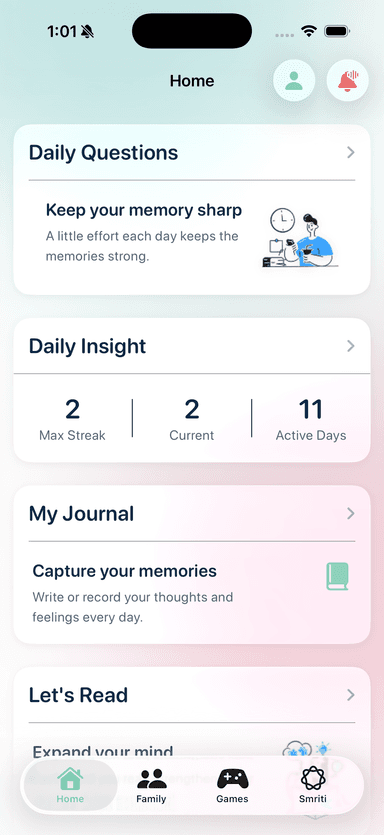
- Targets all three memory types: long-term (distant), short-term (immediate), and recent (remote) memory
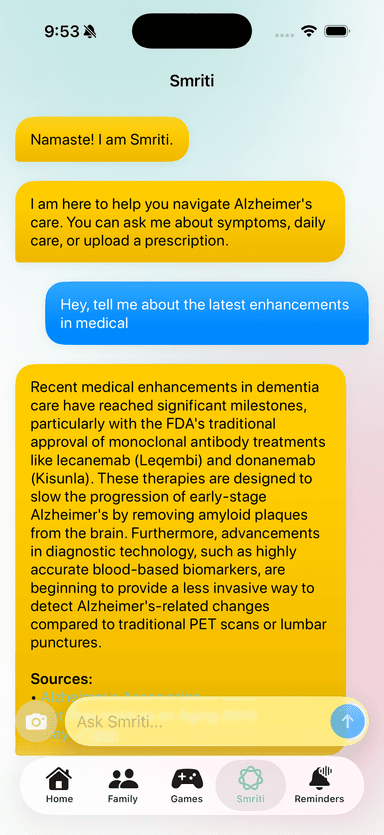
- Smriti AI routes to Apple Foundation Models on supported iPhone 15 Pro+ devices and uses Recap's custom AI service otherwise
- Mood journaling & memory entries with text, photos, and voice recordings
- Smart reminders for medication, appointments, and daily routines
- Enables family members to remotely create daily memory questions with photos
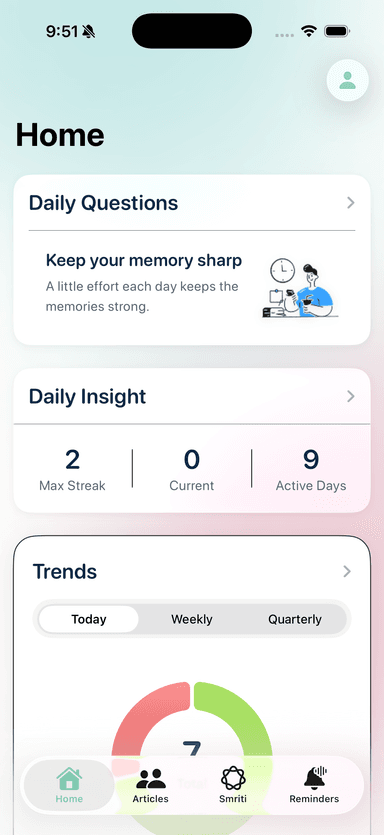
- Dashboard analytics to track cognitive performance over time
- Encourages daily engagement through streaks, cognitive games, and structured routines
The Science Behind Recap
Recap's approach is grounded in neuroscience research on memory systems. The app targets three clinically recognized memory types that are progressively affected by Alzheimer's disease.
Long-term Memory
Memories from years ago — childhood events, life milestones, and deeply encoded experiences.
Neuroscience
Long-term memory relies on the hippocampus for encoding and the neocortex for storage. In Alzheimer's, hippocampal damage occurs early, but distant memories encoded long ago may persist longer.
How Recap Addresses This
Recap uses personalized daily questions about past life events, family photos, and the Smriti AI companion’s reminiscence mode with automatic Apple/custom provider routing to reinforce long-term recall pathways.
Short-term Memory
Very recent memories — what happened minutes or hours ago, such as a conversation or a meal.
Neuroscience
Short-term memory has limited capacity (typically 7±2 items) and duration. Alzheimer's often impairs this first, making it hard to remember recent events or instructions.
How Recap Addresses This
Cognitive games exercise short-term recall through pattern matching and spatial recognition. Journal entries with voice recordings also reinforce immediate memory encoding.
Recent Memory
Memories from days to weeks ago — what someone did last weekend or a recent doctor visit.
Neuroscience
Recent memory requires consolidation from short-term to long-term storage, a process that sleep and repetition facilitate. This consolidation is disrupted in Alzheimer's.
How Recap Addresses This
Daily questions, streak-based engagement, and mood journal entries encourage repeated recall of recent events. Smart reminders provide structured daily anchors that support consolidation.
Designed for Every Stage of Alzheimer's
Early Stage
Mild memory lapses, difficulty finding words, misplacing objects. Patients are mostly independent.
Recap's role: Recap provides cognitively stimulating games and daily questions to help maintain existing memory function and build engagement habits.
Middle Stage
Increasing confusion, trouble recognizing family, behavioral changes. This is typically the longest stage.
Recap's role: Family-created questions with photos help reinforce recognition. Simplified game difficulty levels and streak tracking maintain routine.
Advanced Stage
Severe memory loss, difficulty communicating, requiring full-time care assistance.
Recap's role: Focus shifts to gentle engagement — familiar photos, simple questions, and family connection features to maintain emotional bonds.
Sources: World Health Organization (WHO), Alzheimer's Association, Alzheimer's Disease International, National Institute on Aging (NIA)
Built for Real Memory Care
Every feature in Recap is designed around actual cognitive science and the needs of Alzheimer's patients and their families.
Smriti AI Companion
Smriti uses Apple Foundation Models on supported iPhone 15 Pro+ devices, and automatically routes to Recap's custom AI service for all other cases.
Daily Memory Questions
Family members remotely create personalized questions about shared memories, complete with photo attachments. Questions target different memory types for comprehensive cognitive exercise.
Cognitive Games
Engaging, science-informed games that exercise spatial memory, pattern matching, and cognitive flexibility — all with performance tracking.
Mood Journaling & Memories
Create mood-aware journal entries with text, voice recordings, and photos. Tag people, places, and events to build a rich personal memory archive.
Smart Reminders
Set reminders for medicine, appointments, exercise, meals, hydration, and daily chores with flexible scheduling — from one-time to recurring frequencies.
Dashboard Analytics
Visual analytics showing cognitive performance trends over time. Helps caregivers and doctors monitor changes and identify concerning patterns.
Memory Assessment
Cognitive assessments evaluating memory performance across multiple dimensions, with historical reports to track changes and inform clinical decisions.
Family Synergy
Shared dashboards, health insights, photo and story sharing, medication coordination, and remote monitoring for connected caregiving.
Streaks & Engagement
A daily streak system with calendar tracking motivates consistent engagement. Research shows regular cognitive exercise provides the most benefit for memory maintenance.
How It Works
Getting started with Recap takes just a few minutes.
Choose Your Role
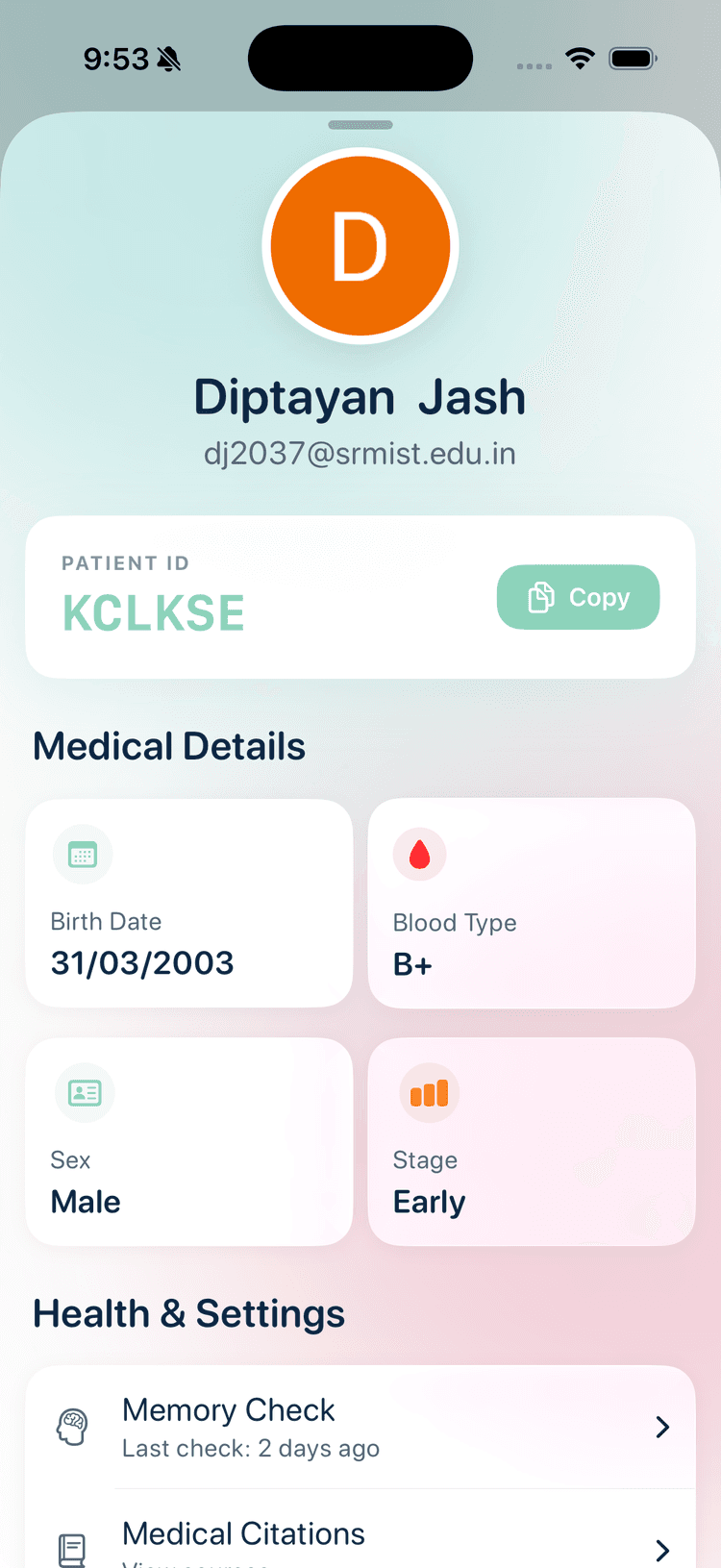
Sign up as a Patient or Family Member. Patients get daily questions, games, mood journaling, reminders, and the Smriti AI companion. Family members get monitoring tools and shared dashboards.
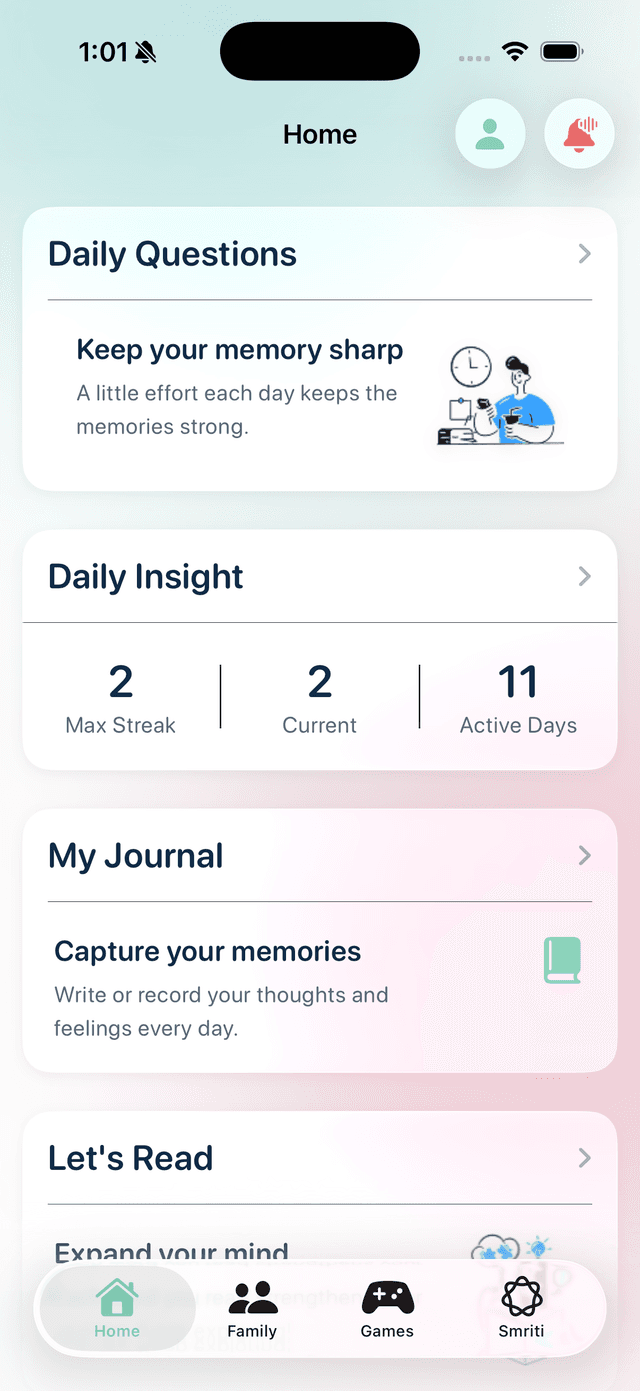
Engage Daily
Answer personalized memory questions, play cognitive games, write mood journal entries, chat with Smriti AI, and build your daily streak for consistent brain exercise.
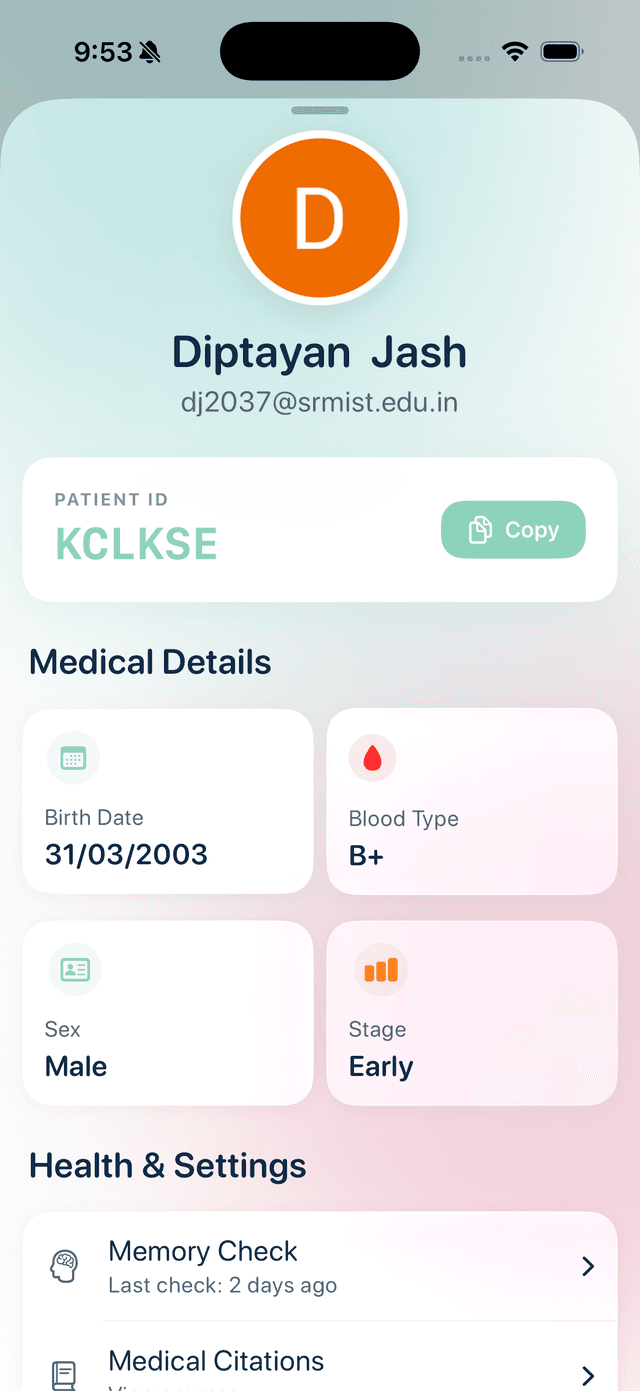
Track Progress
View analytics tracking cognitive performance over time. Share assessment reports with healthcare providers and monitor trends.
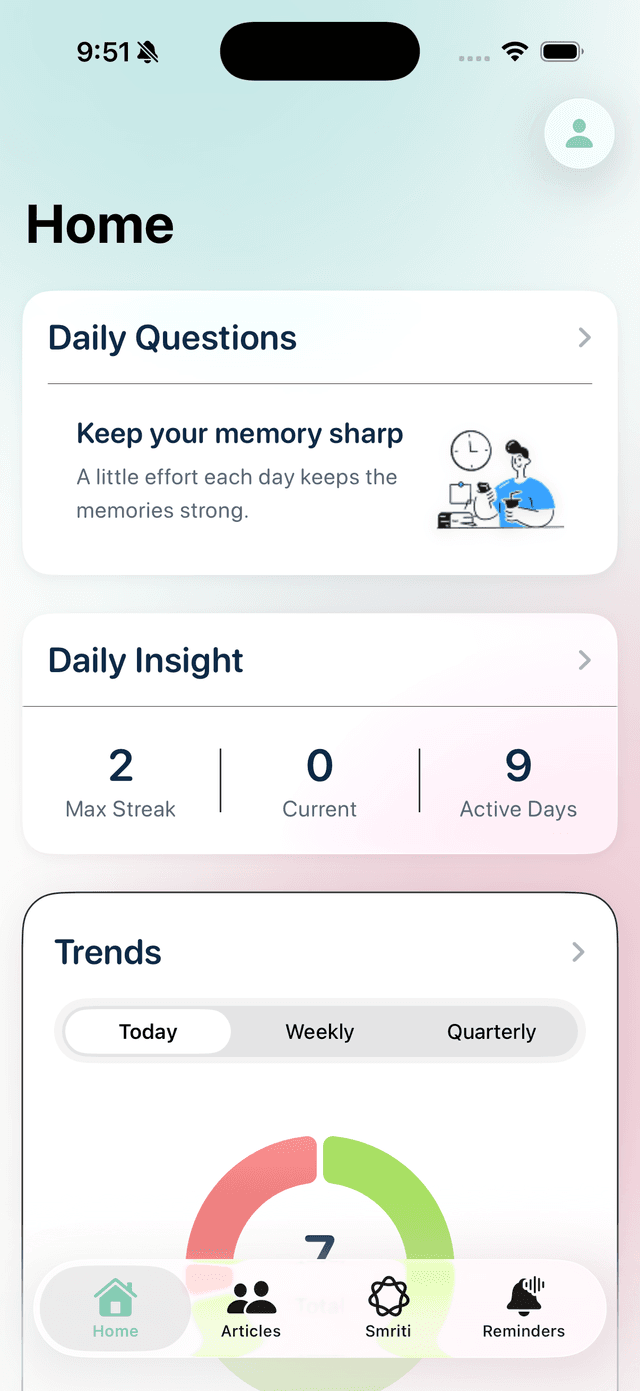
Start Supporting Memory Care Today
Download Recap on the App Store and begin a structured, science-informed approach to memory care for your loved ones.